
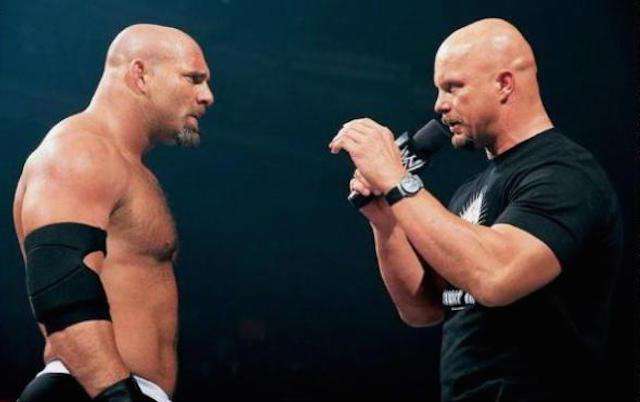
Goldberg remembered Jimmy House’s first wrestling match and called him that morning with advice. Speaking with Bryan Asbury on Developmentally Speaking, House recalled how his childhood hero became a mentor and explained why wrestling has challenged him more than jiu-jitsu or powerlifting.
House, who wrestled as CJ Valor in EVOLVE, said their relationship began before they met in person. He credited CT Fletcher with making the introduction after Goldberg had noticed his lifting videos.
“I had connected with him maybe five or six months prior to meeting him and before that I would tag him in some lifting videos on Twitter and he would reshare it and stuff like that. So he started to kind of develop awareness around me. But then when our mutual friend CT Fletcher had connected us together because he and CT are really good friends. CT had put in a good word for me essentially just kind of putting me over being a little bit more than just a fan. Somebody that has actually really used Goldberg’s motivation to try to accomplish everything that I do to the highest degree.”
“And then now to be super comfortable with him and not think much of it. It’s cool to talk about it really because you see the journey from a little kid seeing him as Superman and then now just being able to call him like a father figure and him calling me one of his kids. It’s really special.”
Asked what fans might not know about Goldberg, House pointed to the support he received before his debut. He also described how Goldberg’s interactions with children shaped what he wanted from his own career.
“Even like my first ever wrestling match, I couldn’t believe that he remembered when my first wrestling match was going to be. I had told him months prior and he had called me the morning of to give me a pep talk and give me advice and everything. And obviously has done a ton of other things for me really, but he’s gone above and beyond to show that he cares about me truly as if I was one of his family members. And I’ve seen him do that for multiple other people as well, be it the conversations that I hear him on the phone or seeing him interact with other people or even just seeing how he interacts with fans.”
“It’s easy to think that you see somebody act a certain way with fans during a segment of a professional wrestling show and think that that’s them playing a character or that’s them being a baby face or a heel or whatever. But I can assure you that anytime that you saw a Goldberg interact with a fan, especially a kid, that was about as real as you can possibly get when it comes to him. Because when you get to really know him, you start to find out that that was his main motivation to really wrestle. I mean, outside of money and providing for himself and his family, but as far as what made him love the process, it was the impact that he could have on kids.”
“And that’s where it inspires me so much because I feel very much drawn to do the same thing with my career. And I’ve been able to experience that a good handful of times now in the couple years that I’ve been wrestling. There’s hard to find a feeling that replaces how fulfilled I feel after legitimately having an impact on a kid or having a parent message me telling me about the impact that I had on their child. And so that’s a feeling that I plan to always kind of continue to chase.”
House has also discussed the television experience he gained through WWE ID and EVOLVE. Asked about his initial training, he explained why his background in other sports didn’t prepare him for every part of wrestling.
“I really never expected it to be easy because I had done enough athletics at that point in my life to understand that anything at a high level is not easy. And the people that make it seem smooth, it’s because they’ve done a lot of work to do so. And it’s actually probably really difficult. That can be said for jiu-jitsu, powerlifting, anything that I’ve done athletically. So, I had only assumed that professional wrestling would be the same, if not harder.”
“I probably didn’t expect the bumping aspect to be as jarring because I just really had no gauge to know what that feels like. I had been thrown hard on mats before with jiu-jitsu, but it’s a different feeling. It’s not nearly as loud. It doesn’t really throw your brain around at first. It’s a different type of fall than it is in MMA or jiu-jitsu.”
“So, that took a while to get used to, but the farther I get in professional wrestling, the more I come to find that it’s actually the hardest thing that I’ve ever done because of the fact that it’s the largest assortment of skills from all these different angles that you have to get good at in order to excel. Not just short term, but especially long term. Promos, ring work, conditioning, strength, PR work, business, branding, networking, all these different things that go into it that you wouldn’t think of, especially if you’ve done sports before. But generally when you’ve done sports, you only ever think of the performance aspect, whereas the performance aspect in professional wrestling is important, but it’s actually a decently small percentage in the respect of everything else you have to also master and work on. So that was different for me to learn and adjust to.”
Source: Developmentally Speaking with Bryan Asbury.