
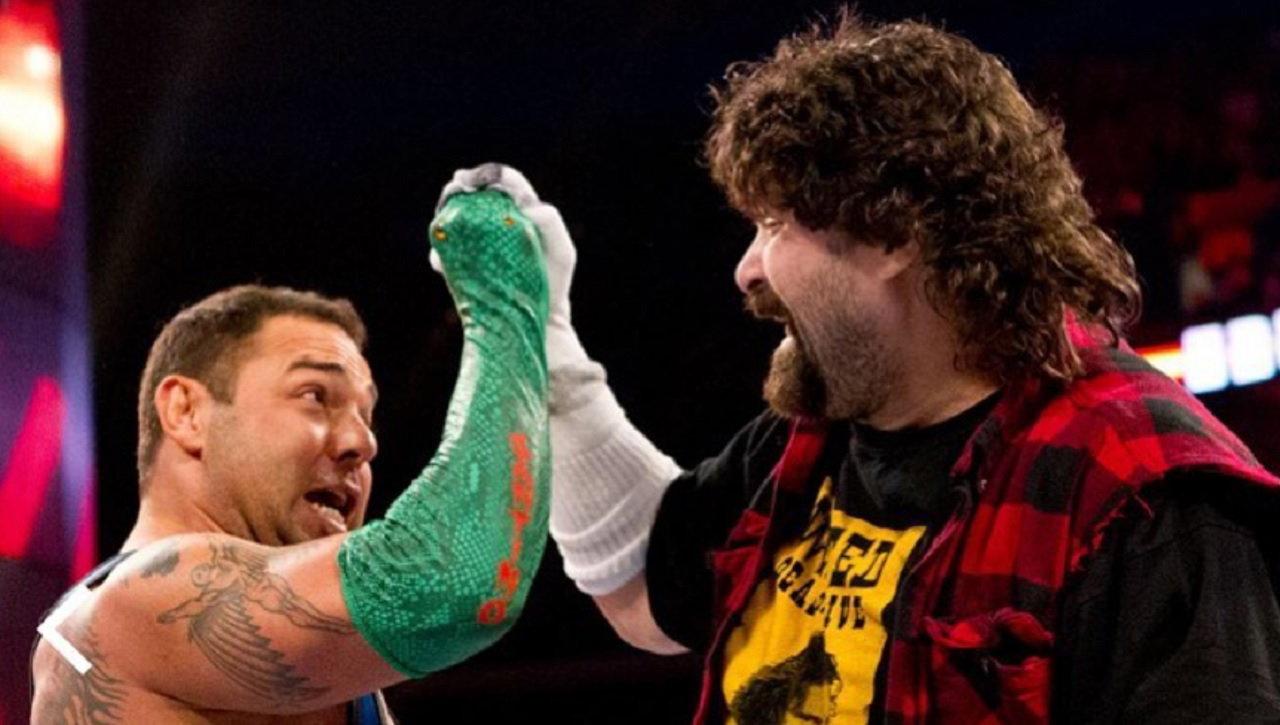
Santino Marella has revealed that his memorable Cobra showdown with Mick Foley’s Mr. Socko during the 2012 WWE Royal Rumble was his idea, although the segment didn’t go entirely as planned.
During an appearance on the We R Wrestling podcast, Marella reflected on the fan-favorite moment, which saw the two WWE stars prepare their signature moves for a showdown before Cody Rhodes interrupted.
Marella explained that he pitched the idea himself and recalled how excited Foley became when he first heard the concept.
“I pitched it. I kind of came up with it. But my favorite part about it, is when I was explaining it to Mick Foley, the excitement in his face, and he was just brought back to… he was like a fan, you know, he was picturing and visualizing it. He just had this huge smile on his face, and then when we executed it, you know, we didn’t time it out, but it took the exact same time to put on our socks and our cobras.”
While the showdown made it onto the broadcast, Marella revealed that the original plan called for a longer exchange between the two before Rhodes intervened earlier than expected.
“Then we were actually, we had more planned. We were supposed to go like all the way to one side and then kind of all the way back to the other side. But Cody Rhodes, he jumped us too early, and I remember saying, we had more planned, man. But, at least we got to do the most important part, like just the showdown.”
Elsewhere in the interview, Marella discussed what he believes separates TNA Wrestling from WWE and AEW, pointing to the additional creative freedom afforded to performers.
The current TNA Director of Authority explained that the promotion’s less structured approach allows wrestlers to develop their characters and performances without the same level of oversight found in larger companies.
“So TNA is not overproduced. We don’t have 15 writers or we don’t have 15 producers. We have more freedom. The individuals in the ring have a little more freedom, and when you have freedom, because you hear about back in the golden day of wrestling, they didn’t write their promos for them. They knew their characters. They came from other territories, and you’ll hear guys like Roddy Piper back in the day say, yeah, they didn’t write any promos for me, and that was the golden era.”
Marella acknowledged that modern television requires certain safeguards, particularly when it comes to network standards and sponsors, but maintained that TNA’s approach provides an important advantage.
“So there’s something, you know, I know today it’s different, right? You’re on television, you’re on a network. You have to- there has to be some quality control. You got to make sure that people aren’t saying things that are, you know, going to offend sponsors and stuff. So you do have to know what’s happening on television that basically every second, right? To protect yourself. But I think that’s one of the strengths in TNA is that we do have some more creative freedom at the individual level.”