
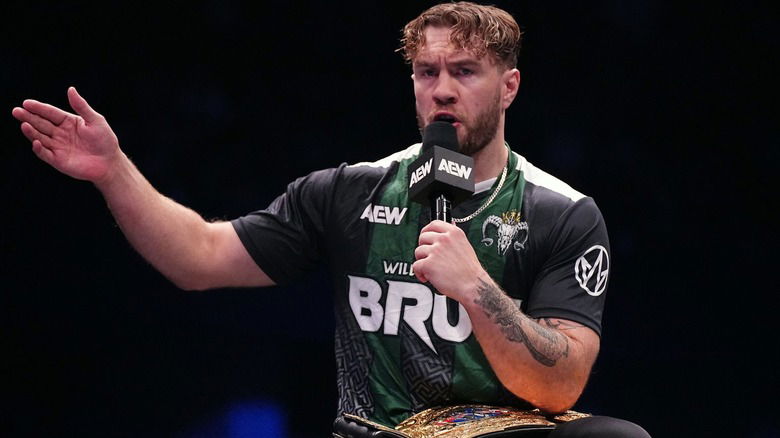
AEW’s first Clockwork Carnage match at WrestleDream asked a dangerous question: what if a world-title match had enough rules that the wrestlers actually had to pay attention to them? Will Ospreay retained after a 15-minute scoring period, and the finish gave the clock the kind of timing most wrestling clocks only dream of having. The match wasn’t tidy, but its mess revealed something useful about how wrestling makes a stipulation matter.
The eight-man match began with staggered entries and eliminations. Once the last wrestler entered, the survivors had 15 minutes to score pinfalls or submissions, with the highest total winning the AEW World Championship. That sounds like somebody stapled a Royal Rumble to an Iron Man match and told the referee to keep the receipt, but the two stages gave the wrestlers different problems to solve. Here are five ways the format made the rules part of the story.
5. Arriving late helped, but it didn’t make anybody safe
Ospreay drew the first entry and had to survive the entire opening stage. Samoa Joe arrived eighth, after Konosuke Takeshita had already eliminated Mike Bailey and Kazuchika Okada had eliminated Takeshita. A late number was an advantage because it meant fewer minutes at risk of elimination, but it wasn’t a magic ticket to the title. If AEW uses this format again, that distinction matters more than another graphic explaining who drew which number.
Opening stages in multi-person matches can feel like everyone is waiting for the real match to start. This one gave an early pin an immediate consequence, then changed the meaning of a pin when the last entrant appeared. The same three-count went from eviction notice to one point on a scoreboard. Wrestling loves changing the rules halfway through a match, usually because a general manager found a microphone. Here, the change was announced in advance and the wrestlers had to live with it.
4. A pinfall became a resource, which is a little horrifying
Joe scored the first point of the second stage by pinning Darby Allin after a Muscle Buster. Ricochet then pinned Allin while he was still down. Under ordinary match logic, Allin’s loss would end his night. Here, he remained in the match and eventually led the score with two falls. That is a better twist than simply saying the stipulation is chaotic and asking eight people to perform chaos on command.
It also exposes the format’s danger. If a wrestler can be pinned and immediately pinned again, a fallen body starts to look like the office printer when everybody has a deadline. The rule is funny in its literal cruelty, but it can cheapen a fall if every kickout suddenly feels optional. The match worked best when the score changed what a wrestler did next, not when it merely gave the broadcast another number to update.
3. The champion lost falls and kept the championship
Allin pinned Ospreay with a Coffin Drop, and Joe later forced Ospreay to submit to the Coquina Clutch. Neither result ended his title reign because Clockwork Carnage rewarded the most falls at the end of the scoring period. That’s a strange sight for a world champion, and it should be. A title match ought to make a loss feel costly even when the rulebook says it isn’t final.
Ospreay’s answer was to keep scoring. He pinned Ricochet, pinned Allin and finally pinned Adam Copeland to finish with three points. AEW didn’t erase the earlier losses by having the champion stand up and declare himself superior to arithmetic. It made him recover from them within the arithmetic, which is a much stronger argument for this stipulation than simply calling it unpredictable.
2. The last two minutes gave Copeland an actual problem
Copeland scored twice late, pinning Joe and then Ricochet with spears to join Ospreay, Allin and Joe at two points. Suddenly, the man who had been absent from the leaderboard was one fall from walking out with the title. He had to find that fall before the clock expired, while five other survivors were still capable of ruining the plan. That is the sort of simple pressure a complicated match needs.
With about a minute left, Copeland had Ospreay down but didn’t get a pin. Twenty seconds remained when he speared Okada and fell across him, only for Ospreay to stop the cover with a Hidden Blade. The finish wasn’t a random buzzer deciding who owned the belt. It was a wrestler seeing the winning fall in front of him, taking it away, and using the remaining seconds to get his own.
1. The rules did more work than the gimmick name
Clockwork Carnage is a name that sounds as though somebody spilled an energy drink on a board game. The format is also complicated enough that WrestlingHeadlines kept a rules and results tracker for it. Yet by the final seconds, the audience only needed to understand one thing: four men had two points, and Ospreay needed one more before time ran out. The ending translated the rulebook into a decision people could follow.
That is the philosophy worth keeping if AEW brings the match back. A stipulation isn’t good because it takes a paragraph to explain, and it isn’t bad for that reason either. It earns its place when the wrestlers use its limits to make choices they couldn’t make in a normal match. Ospreay’s final pin did exactly that. The clock didn’t create the drama for him; it gave him 20 seconds to do something about it.
Sources: AEW’s original Clockwork Carnage rules announcement; AEW’s official WrestleDream match results.